Celebrating 50 Years In Craftsmanship
Skip to content

Scroll Saw Blades

Choosing the right scroll saw blade is the fastest way to improve cut quality, reduce tearout, and get smoother finishes. Whether you are using a Hegner Scroll Saw or another pinless saw, we stock a curated selection of professional ScrollAmerica and Olson Scroll Saw Blades trusted by woodworkers, pattern makers, and fine scroll artists.

Popular Scroll Saw Blade Types

  • Skip Tooth — The classic everyday blade for wood and plastics; fast cutting with predictable control.
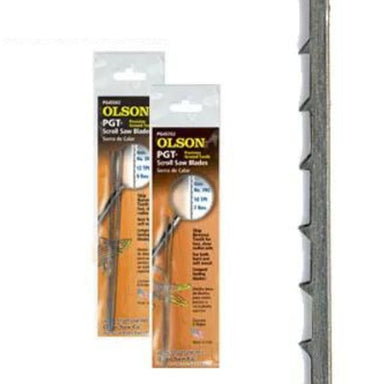
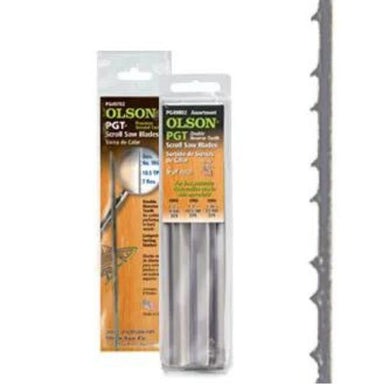
  • PGT Precision Ground Tooth — Olson’s premium blades with ultra-sharp, ground teeth that stay cool and cut cleanly.
  • Spiral Blades — 360° cutting with no need to rotate your workpiece—ideal for intricate inside cuts.
  • Reverse Tooth — Helps prevent tear-out on the bottom of the board for cleaner finishes on both sides.
  • Metal-Cutting (Jeweler’s Style) — Fine, hardened teeth for cutting non-ferrous metals and detailed jewelry work.

Sample all major blade types to quickly find your favorites with our Scroll Saw Blade Pack or learn more about all blade types below.

How to Choose the Right Scroll Saw Blade for Your Project

Different blades excel at different cuts. Use the guide below to match the right tooth style to your material, thickness, and detail needs.

Not sure where to start? Our 76-Blade Sample Pack gives you an easy way to test multiple blade types and quickly find your favorites.

Clean, Precise Cutting in Wood

Precision Milled Tooth
High-performance, milled teeth designed for sharp, fast cutting with reduced tearout. Ideal for hardwoods, softwoods, and plywood.

Precision Milled Scroll Saw Blades

Skip Tooth
The most popular all-purpose blade. Widely spaced teeth cut cleanly on the down stroke and stay cool for extended use.

Skip Tooth Scroll Saw Blades

Premium Double Tooth
Pairs of teeth followed by wider gullets produce smooth finishes and steady cutting in wood and plastics.

Double Tooth Scroll Saw Blades

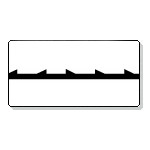
Reverse Tooth
Lower reversed teeth help reduce tearout on the bottom of the cut — great for clean edges in plywood and laminates.

Reverse Tooth Scroll Saw Blades


Blades for Tight Curves & Detail Work


Blades for Thick Stock & Aggressive Cutting

Fretta Thick Material Blades
Coarse tooth geometry designed for cutting 3/4" to 2 1/2" thick wood cleanly and efficiently.

Fretta Thick Material Scroll Saw Blades

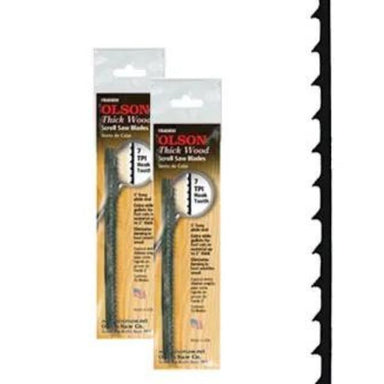
Olson Thickwood Hook Tooth
Hook-tooth design with wide gullets for rapid chip removal and smooth finishes in thick hardwoods and multilayer stock.

Olson Thickwood Hook Tooth Blades


Blades for Metals, Plastics & Specialty Materials


Jeweler's Metal Cutting
Made from specialty alloys for cutting hard and some soft non-ferrous metals cleanly. Excellent for jewelry, craft metals, and fine detail work.


Scroll Saw Blades FAQs

What are the different types of scroll saw blades?

Scroll saw blades come in several common styles — Skip Tooth, Double Tooth, Precision Milled, Reverse Tooth, Spiral, 2-Way Tooth, Thick-Material (Hook), and specialty metal-cutting blades. Each tooth pattern affects how fast the blade cuts, how tightly it turns, and how cleanly it finishes edges.

What are the best scroll saw blades for wood?

For general woodworking, Skip Tooth and Precision Milled Tooth blades are the most popular because they cut quickly while staying cool. Reverse Tooth and Double Tooth blades help reduce tear-out on plywood and give smoother finishes. Thick-material blades are best when cutting stock over ¾".

What scroll saw blade should I use for cutting metal?

For non-ferrous metals and jewelry work, use Jeweler’s Metal Cutting scroll saw blades — they use hardened alloys and fine tooth spacing designed specifically for metal. Regular wood blades (skip, double, reverse) are not recommended for metal.

What’s the difference between pinned, pinless, and pinned spiral scroll saw blades?

Most modern saws — including Hegner — use pinless blades, which allow tighter radius cuts and more blade options. Pinned blades are larger, easier to install, and common on entry-level saws, but they can’t handle very tight curves. Spiral blades are typically pinless, but pinned spirals exist for saws requiring pinned ends.

How do I choose the right scroll saw blade size (TPI, width, thickness)?

Higher TPI (teeth per inch) cuts slower but cleaner; lower TPI cuts faster but rougher. Narrower blades turn tighter curves; wider blades stay straighter in thicker materials. Thickness affects durability — thicker blades track straighter but aren’t ideal for intricate fretwork.

Is there a scroll saw blade chart I can use?

Yes — this page displays a clear breakdown of blade types, tooth patterns, materials, and applications to help you select the right blade. Many users rely on the 76-Blade Sample Pack to test several sizes and styles before settling on their favorites.